
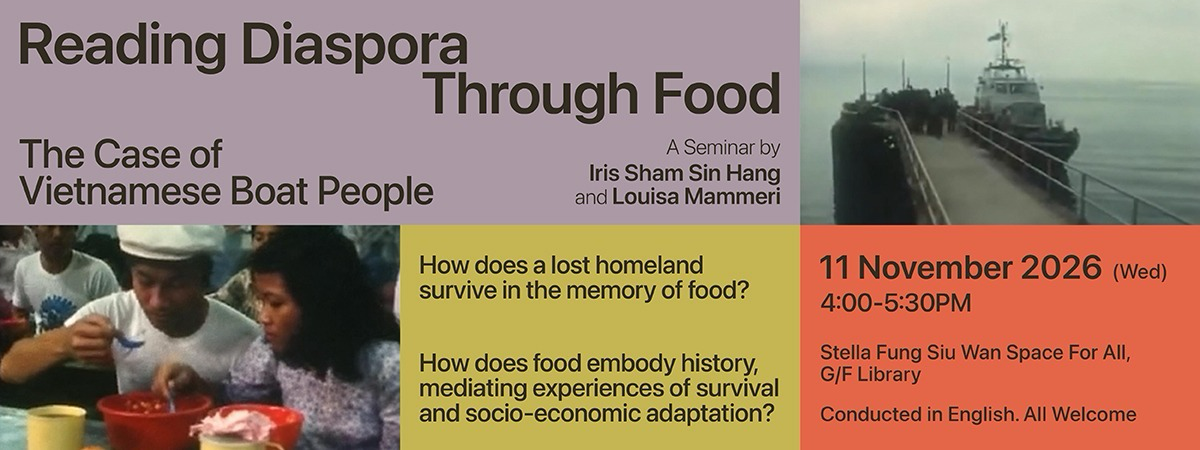
How does a lost homeland survive in the memory of food? How does food embody history, mediating experiences of survival and socio-economic adaptation?
In this seminar organised by the English Department, artist-researcher duo Iris Sham and Louisa Mammeri trace the diasporic experience of Vietnamese Boat People through literature that touches upon food. While historical narratives rarely draw on archives relating to cooking, culinary memories can be a critical source for alternative histories.
Across literary genres, the duo discusses how Vietnamese writers in diaspora depict resilient cuisines born within economic limits in new geographies. Examining texts including Andrew Lam’s Perfumed Dreams, Eric Nguyen’s Things We Lost to the Water, and Viet Thanh Nguyen’s short story Black-Eyed Women, they illustrate how oftentimes a character’s development parallels the evolution of a recipe. Some recipes fill silences, and the daily act of feeding can become an alternative language, bridging an older generation unable to speak of their past with younger ones grappling to digest family histories.
This seminar builds on and extends from the speakers’ site-specific research and interactive performance at the Inter-island Festival 2026. Through the lens of food, they investigate the everyday realities and emotional states of Vietnamese Boat People who sought refuge in Hong Kong between 1975 and 2000.
Seminar Title / Reading Diaspora Through Food: The Case of Vietnamese Boat People
Speakers / Iris Sham Sin Hang and Louisa Mammeri
Time / Wednesday, 4-530 PM, 11 Nov 2026
Venue / Stella Fung Siu Wan Space For All, G/F Library
Language / English
Charge / Free
All Welcome. HSUHK undergraduate students will receive one iGPS point for attending the event.
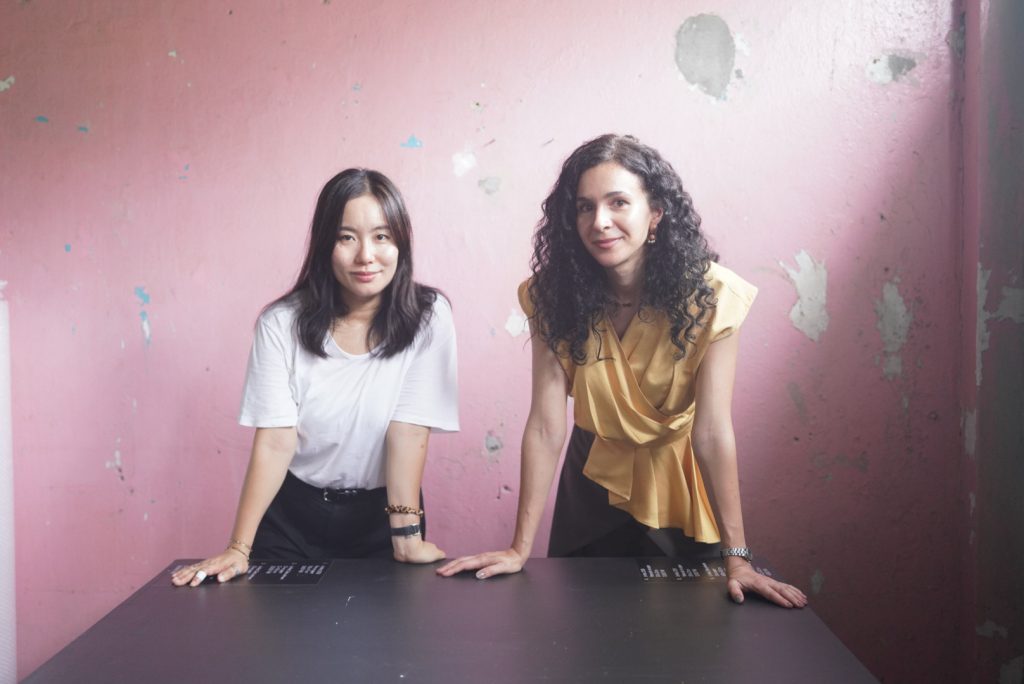
Iris Sham Sin Hang is an artist, researcher, and culinary practitioner whose interdisciplinary practice intertwines food, image, and material processes. With a double degree in Government and Laws from the University of Hong Kong (2009) and an alternative Master’s Degree in Food Based Art Research from The Gramounce (2025), her work arises from a sustained engagement with social justice, personal and collective memory, cultural rootedness, and the layered histories that shape identity, especially within Hong Kong’s postcolonial realities and its diasporic resonances. A member of the Food Art Research Network and the food editor of Planted Journal.
Louisa Mammeri is a cultural worker whose practice seeks truths where official narratives perpetuate bias, ignorance, and power dynamics. Her mediums include culinary performances and community mobilisation. Her practice is motivated not by pointing fingers but by shifting the frame to enable more constellations of care and solidarity to emerge. She has worked across Asia, Europe, Africa, and North America, in international organisations, community organising, and philanthropy. Academically trained in Political Science and Political Economy at Sciences Po Paris and the London School of Economics, she has since honed an art practice that uses food to convey new perspectives on agency and creativity around the issues she engages with.
Images courtesy of RTHK (Hong Kong Connection, 1985) and the artists