International Conference on Applied Language Sciences (ALS 2026)

International Conference on Applied Language Sciences (ALS-Methoken 2026)


Call for Proposals

Conference Overview

Date: May 15-16, 2026

Venue: The Hang Seng University of Hong Kong

Organizers

  • Department of English, The Hang Seng University of Hong Kong, Hong Kong SAR
  • Global Digital Applied Linguistics Association (GloDAL)
  • Methodology SIG, Kansai Chapter, Language Education and Technology (LET), Japan
 
ALS 2026 brings together a global community to advance state-of-the-art approaches in applied language sciences. The conference foregrounds methodological innovation, transparent and reproducible research, and real-world impact across language education, assessment, translation, and language technology.
The conference promotes frontier dialogue and cross-sector collaboration across research, theory, methods, and practice. It highlights innovations in language technologies and artificial intelligence, language teaching and assessment, and global communication.
 
ALS 2026 welcomes global scholars, postgraduate students, educators, assessment professionals, and industry partners in applied linguistics and related fields.
 
Audiences: Global scholars, postgraduate students, educators, assessment professionals, and industry partners in applied linguistics and allied fields.

Plenary Speaker and Invited Colloquia Information

We have created an exciting program for the International Conference on Applied Language Sciences (ALS 2026), reflecting the wide range of research interests in applied linguistics.

Check out the plenary speakers and invited colloquia below:

Plenary Speakers 

Invited Colloquia

Conference Themes and Topics

The conference welcomes the following topics, but not limited to:

  • Innovation in language teaching and learning
  • GenAI in language teaching and learning
  • Foreign language teaching and practice
  • SLA & Pedagogy: input/output & interaction, psycholinguistics, TBLT, strategies & motivation
  • Assessment & Evaluation; instructional interventions & design based research
  • Academic writing, feedback & revision (incl. AI assisted assessment)
  • Technology-enhanced language learning
  • Artificial intelligence in language research
  • Bilingualism/Multilingualism & Pragmatics
  • Global Englishes and communication

Presentation Formats

  • Oral Presentation: 20 minute talk + 5 minute Q&A.
  • Symposium / Roundtable: 60 minutes; 3–5 presenters; integrated proposal required.

Symposia should articulate a unifying theme and contribution.

Submission Guidelines

  • Language: English.
  • Abstract length: 200–300 words; include 3–5 keywords.
  • Suggested structure: background & question, methods (data & analysis), main findings/expected contribution, keywords.
  • How to submit: Use the online form here

Review & Decisions

  • Double anonymous peer review based on methodological rigor, innovation, theoretical/practical contribution, clarity, and research ethics.
  • Decision types: oral, symposium, etc.
  • Notifications via email.

Highlights for notice researchers (PhD students or newly PhD graduates)

  • Best Paper Award: certificate and honorarium (Please submit one of your published papers to alsrmconf2026@gmail.com and indicate you are going to attend for this selection)
  • Best Presentation Award: certificate and honorarium (The award will be determined by the committee members who attended and listened to the presentation).

Registration Fees

No registration fees will be charged for ALS‑2026.

Please note that lunch and tea breaks will be charged (but you can opt to bring your own lunch or eat elsewhere and there is no need to pay).

Benefits

Engagement

  • Engage with internationally renowned applied linguistics scholars.

Journal Recommendations for Outstanding Papers

  • Reading in a Foreign Language (Scopus/ESCI Q1)
  • International Journal of TESOL Studies (Scopus Q1)
  • Digital Applied Linguistics
  • Asian Journal of English Language Teaching (Scopus)

Publish in our Conference special issue:

Applied Language Sciences (Conference Special Issue)

Important Dates

Abstract submission deadline: April 10, 2026

Notification of acceptance: April 2026

Conference dates: May 15–16, 2026

Venue & Travel

Venue

  • Department of English, The Hang Seng University of Hong Kong, Shatin, Hong Kong

Travel Tips

  • Nearest airports: From HK Airport, take bus A41 or A46 to Shatin New Town Plaza.

Accommodation

We do not provide accommodation. Recommended hotels:

  • Alva Hotel by royal (帝逸酒店) walking distance 10 minutes, but not close to city center.
  • Regal Riverside Hotel (麗豪酒店) by bus 10 minutes, but close to city center.

Organizing Committees

Conference Chairs:

  • Mark Feng Teng, Macao Polytechnic University & Founding president of GloDAL
  • Anna Wing-bo Tso, Head of Department of English, The Hang Seng University of Hong Kong

Executive Organizing Members (in an alphabetical order):

  • Gavin Bui, The Hang Seng University of Hong Kong
  • Amy Kong, The Hang Seng University of Hong Kong
  • Ken Urano, Hokkai-Gakuen University & Executive member of Methodology SIG, Kansai Chapter, Language Education and Technology (LET), Japan
  • Weilun Wong, Universiti Kebangsaan Malaysia
  • Junjie Gavin Wu, Macao Polytechnic University & Founding vice president of GloDAL

PhD Students Committees

  • Amanda Can Zhang, Macao Polytechnic University, Macau SAR, China
  • Allen Weili Xing, Macao Polytechnic University, Macau SAR, China

Contact & Updates

Email: alsrmconf2026@gmail.com

Read More

Departmental Seminar: The End(s) of Global Shakespeare

What are the ends of global Shakespeare as a field of study? In the past three decades, global Shakespeare has expanded Shakespeare studies’ Anglo-centric outlook. We now need new methods to theorize performances of Shakespeare across cultures.

This  presentation suggests heterotopia as a new method to analyze diverse and polyphonic performances. In Michel Foucault’s theory of heterotopia, the notion describes worlds within worlds. Joubin builds upon Foucault’s architectural metaphor to theorize cultural spaces that are transformative because of their contradictory or trans-historical ideologies. Heterotopia, as a parallel space that contains and evokes other spaces, exists in reality (such as a theatre stage) and holds up a mirror to other realities.

This presentation argues that global Shakespeare operates as a heterotopia. Performances connect audiences with fictional worlds in a different time and place. They also evoke other parts of audiences’ contemporary worlds. Heterotopia, or worlds within worlds, captures the vitality and viability of global performances of Shakespeare.

An example of global Shakespeare as heterotopia is Yukio Ninagawa’s high-concept production of Hamlet (1998 and 2015), which turns the art of theatre-making inside out through its metatheatrical conceit. The production opens with actor-characters warming up, running their lines and touching up on their makeup. They mill around on a set that represents the backstage of a theatre where the actor-characters both prepare for and stage Hamlet. The two-story set consists of dressing rooms with privacy curtains, complete with lighted mirrors, photographs, and bouquets. The lower level is a common dressing area for everyone, while the upper level is reserved for leading actor-characters’ individual dressing rooms. This backstage space is now upstage. This set doubles as rooms in Elsinore Castle once the story of Hamlet begins.

Heterotopia pushes back against the illusions of Shakespeare’s universal meanings by pluralizing the aesthetic and political positions across and within artistic, scholarly and pedagogical communities. Global performances of Shakespeare create worlds within worlds by combining the plays and audiences’ senses of place to build cultural spaces that are transformative. Heterotopia, created by the craft of world-making, anchors, enables and endorses some characters’ transformative experiences and self-discovery.

This seminar is part of the Hong Kong International Shakespeare Conference 2026. Following the seminar, there will be a book launch titled “Shakespearean Studies: New Books in the Field” by Prof. Alexa Alice Joubin and Dr. Miriam Lau. The launch will be moderated by Prof. Michael Dobson, Director of The Shakespeare Institute at the University of Birmingham. Details are available on the conference website.

The seminar and book launch will be accessible via the same Zoom link provided below.

About the Speaker

Alexa Alice Joubin is Professor of English, Women’s, Gender and Sexuality Studies, Theatre, International Affairs, and East Asian Languages and Literatures at George Washington University in Washington, D.C., where she directs the Digital Humanities Institute. The inaugural recipient of the bell hooks Legacy Award, she held the Fulbright Distinguished Chair at Queen Mary University of London and the University of Warwick in the UK. In 2026, she received the Shakespeare Association of America’s Barbara Hodgdon Award as well as honorable mention for the Publics Award.

Departmental Seminar: The End(s) of Global Shakespeare

By Prof. Alexa Alice Joubin, George Washington University

Date: Tuesday 14 April 2026

Time: 9:30am – 10:15am

Moderator: Prof. Min-hua Wu, Associate Professor, Department of English, National Chengchi University

Venue: Via Zoom

Viewing Link (for both the seminar and book talk): https://mit.zoom.us/j/94864155318

Meeting ID: 948 6415 5318

Read More

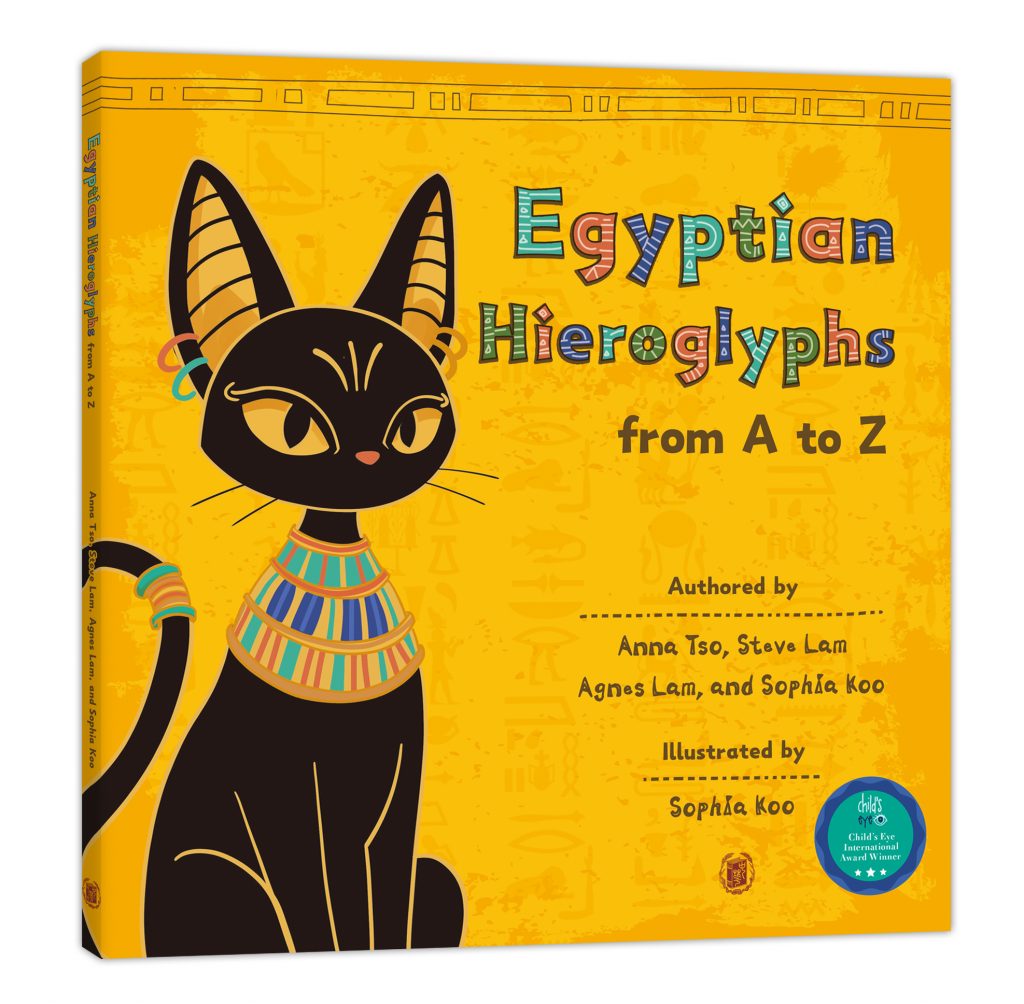
Egyptian Hieroglyphs from A to Z: Learning History Through Symbols

Discover the fascinating world of hieroglyphs with Egyptian Hieroglyphs from A to Z, a book that blends history, language, and culture into an engaging learning experience.

🌟 Guided by Dr Anna Tso, Head of the Department of English, together with Agnes Lam, Steve Lam, and Sophia Koo, this book invites readers to explore the mysteries of ancient Egypt through carved symbols, numbers, and stories.

🔍 With interactive activities, readers can decode hidden messages, design their own cartouche, and gain hands-on insights into how symbols shaped one of the world’s greatest civilizations.

Perfect for students, educators, and lifelong learners, this book transforms the study of ancient Egypt into an accessible and inspiring journey.


New Release Details

  • Title: Egyptian Hieroglyphs from A to Z

  • Authors: Anna Tso, Agnes Lam, Steve Lam, Sophia Koo

  • ISBN: 9789819456666

Read More

Contact Us

For further information about the department, our programmes or services, please get in touch.